
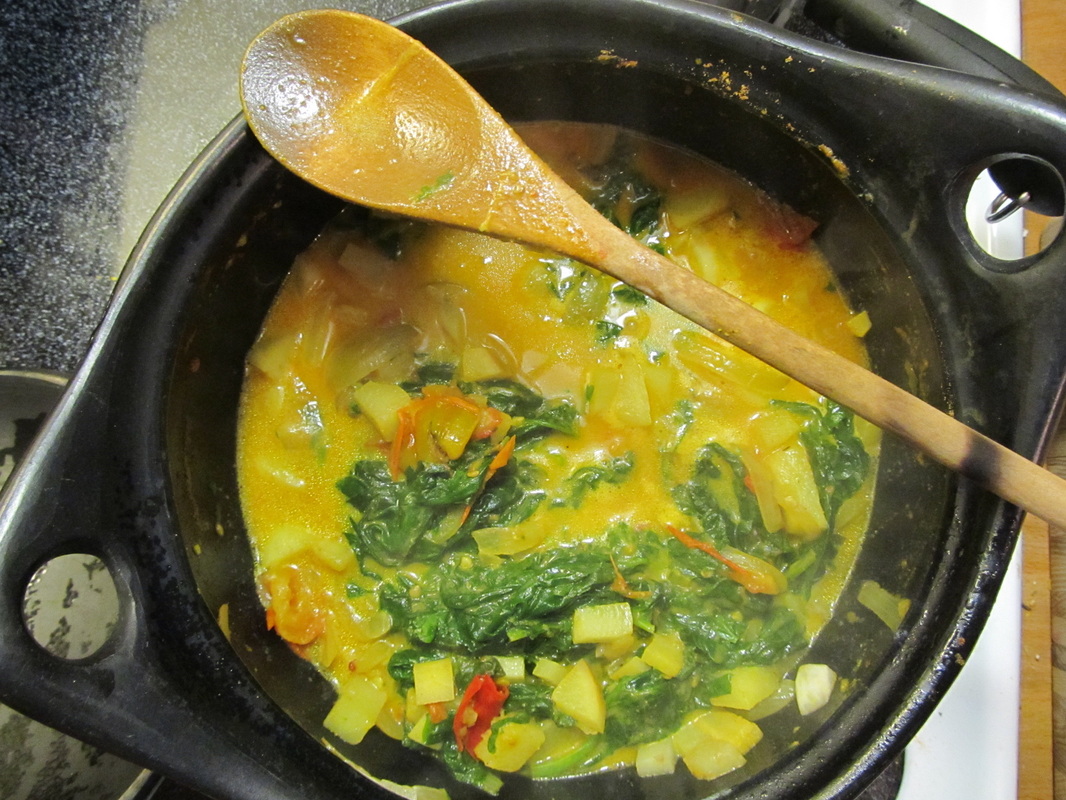
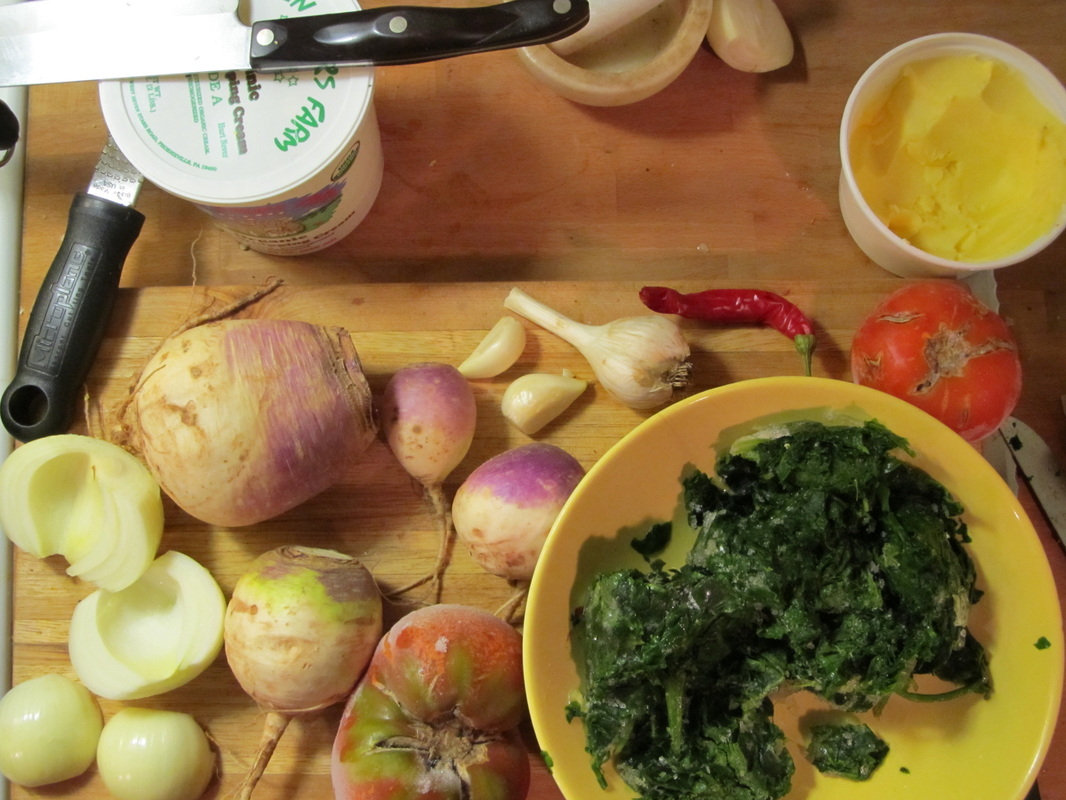
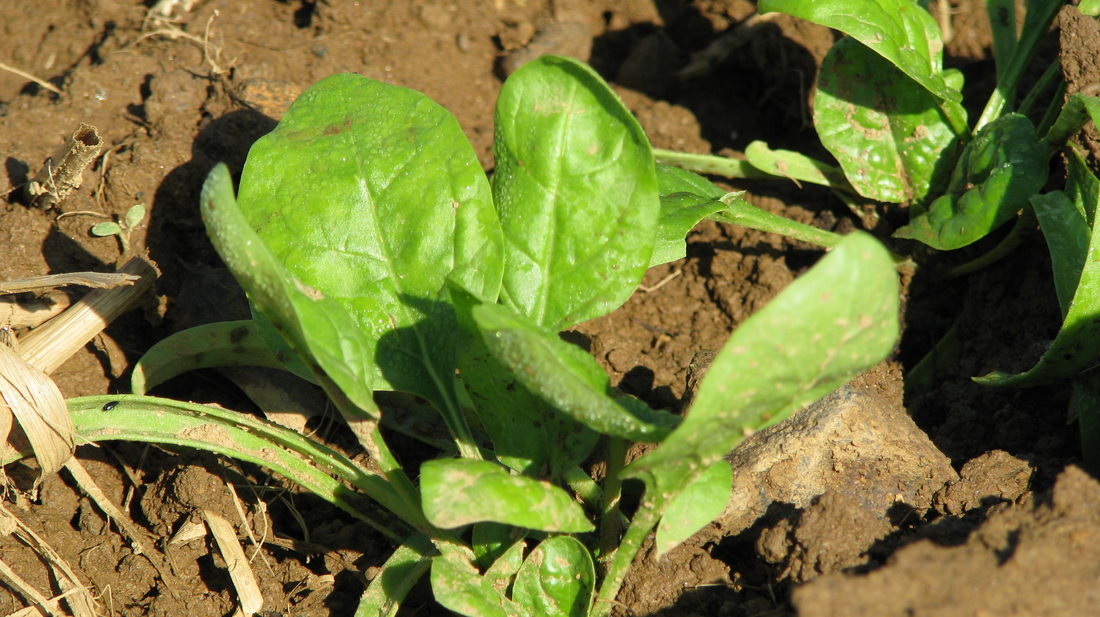
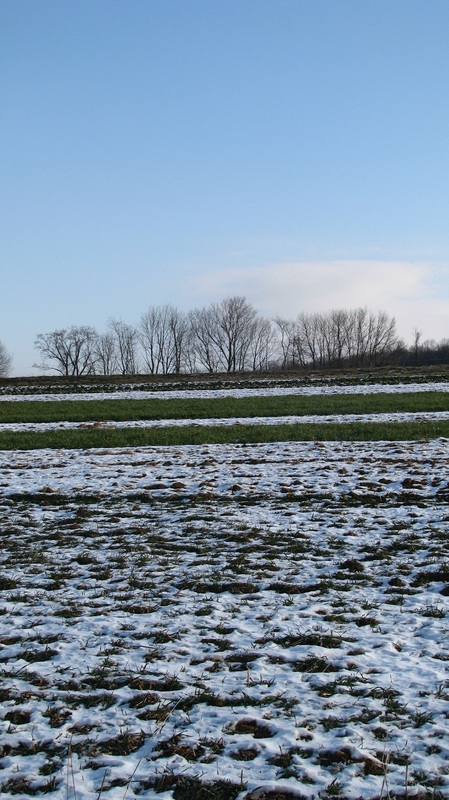
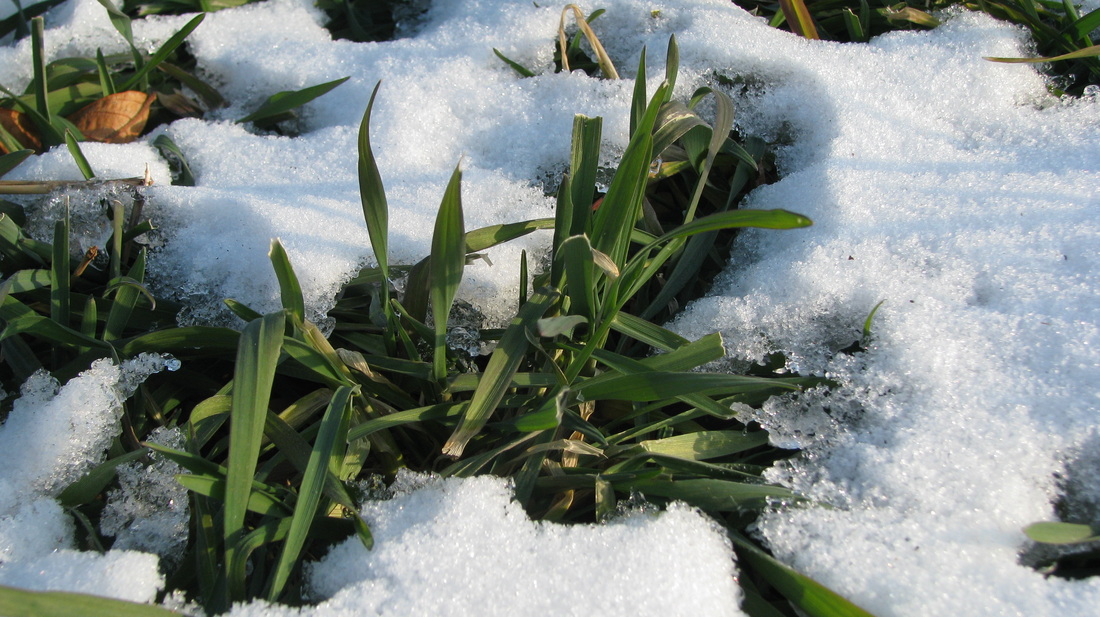
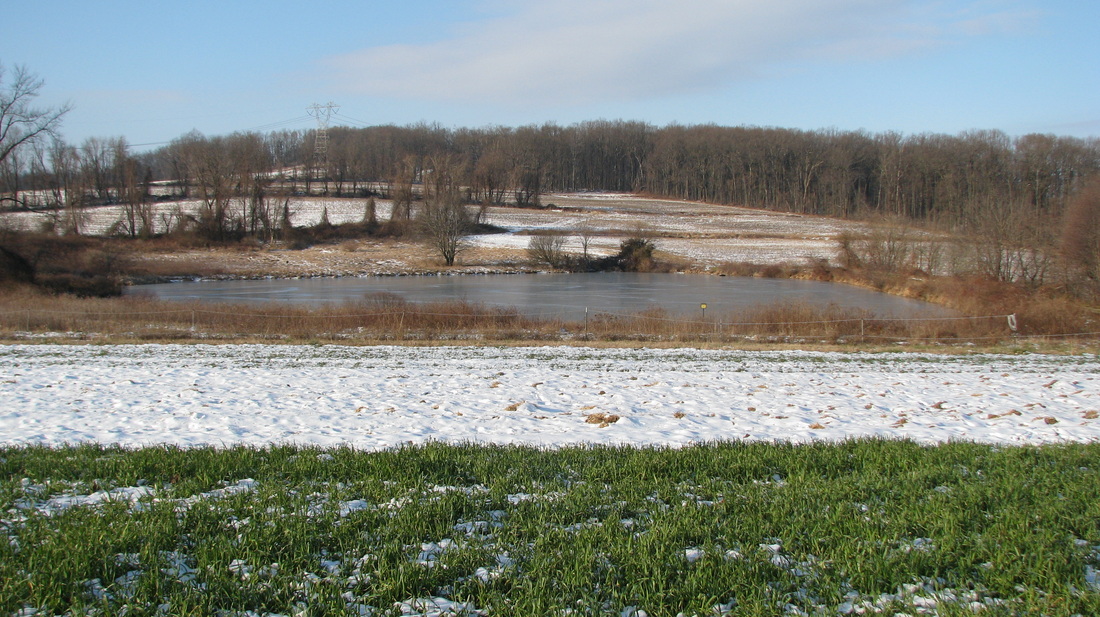
Dear Friends, You’re Invited! -- Please Join us as CSA share members in 2014, Please Help us Outreach to the Community Now! Please join us in 2014! We are currently accepting share members to join us this season. If you are new to CSA, new to Good Work Farm, or have questions about joining, please contact us at goodworkfarm@riseup.net to learn more about us and our growing practices. Ready to join? Click here to download a membership form. PLEASE HELP US reach a broader selection of the community. Please contact us if you can support our marketing efforts by hanging up a Good Work Farm CSA flier at your place of work, place of worship, school, or other community center. We can drop-off fliers to your home if you have a place where they can be viewed by your community. Pick-up Times Announced! Pick-ups will be Tuesdays and Fridays from 2-7 p.m. (Location TBA soon!) If you have already sent in a Commitment Form, please reply with your desired pick-up day. “And I am in that delicious and important place, roaring with laughter, full of earth-praise.” Mary Oliver, from Foolishness? No, It’s Not Anton and I are engaged in something which Anton refers to as “computer farming.” It is not particularly fun or refreshing, and it is much harder to self-motivate when performing acts such as the movement of numbers on excel spreadsheets than the movement of a body in a field of silence and sun, engaging with the earth, growing food in that most tactile of ways. But this planning is necessary, and what the time calls forth. In the warmth of an unexpected winter thaw, yesterday I put on overalls, gathered a cabin-fevered dog and our bucket of compost, and went to go wander around last season’s Good Work Farm fields: peek at overwintering plants, wonder after the remnants of green leafy vegetables, and be in a place where a dog can be a dog, and a woman can be a woman. Warm air, sloppy, saturated, soggy fields, and a few remaining rotting frosted kale stalks and cabbage heads welcomed me; it felt good to amble around a piece of land left open for the growing of food, a place in which I am most familiar and content. I moved back the thick bed of straw to see what garlic stalks might be poking through the muddy earth—blanched pale yellow from sunlessness under their protective blanket; I moved through the rows of crops to see if any edible leaf miraculously made it through negative six degrees and could be salvaged for dinner . None did. Then, we are also in the beginning, middle, or end of an unmapped process called Buying Horses. A process of adjudication and feeling, a process of carefully calculating pros and cons, and then listening to our oh-so-quiet-and-indecipherable intuition to tell us which horses we so deeply, gutturally, unambiguously, connect with. So far we have visited, wondered about, and driven three teams, with unlimited more to meet, drive, and discuss before we decide on the pair who will be our work partners for this Spring, and coming years. Buying horses is full of unknowns, for what can you uncover in an hour or even a day driving and working a team, when it will take the better part of a decade to learn the intricacies of a horse? But, we accept these limitations and try to decipher what we can: Do they pick-up their feet well? Are they responsive, engaged, slow enough for beginners? Do they have experience with all farm machinery? Are they short enough to lift harness over their backs with ease? Are they healthy, sound in (mind and) body? The process is something of a job interview—testing out a working partner who we will rely on so heavily and definitely—and something like dating—finding The Ones who we will be with in sickness and health, good times and bad, early mornings and late nights. And so, possibly, probably, any of these three teams could have worked with us and for us, but without a firm affirmative clarity, we are still searching, still seeking that stout, sturdy, “beginner’s team” who will readily accept their bridles, pick-up their feet, carry in the harvest, stand steady in the field, and help us do the good work of food growing. In anticipation of what may come, Lisa and Anton I Go Down to the Shore Mary Oliver I go down to the shore in the morning and depending on the hour the waves are rolling in or moving out, and I say, oh, I am miserable, what shall-- what should I do? And the sea says in its lovely voice: “Excuse me, I have work to do.” Palak Salajama: Purple Top Turnips and Spinach I made this tonight from last season’s frozen spinach, frozen whole tomatoes, and purple-top turnips from our winter CSA. 1 T butter and 1 T olive oil (x 2) 1 qt bag frozen spinach, thawed, or equivalent fresh (2-3 pounds) 2 large tomatoes, whole, frozen, and cut into chunks (or you could use dried, canned, or fresh) 3 medium-sized purple-top turnips 1 medium-large onion, sliced thin 1 clove garlic, minced 1 t grated fresh ginger 2 t coriander, ground 2 t cumin, ground 1 t turmeric salt to taste 1 dried hot chili or cayenne pepper, or red pepper flakes (optional) 1 C heavy cream 1. Peel rough skin from turnips, remove tops and bottoms and brown parts, and cut into 1/2 inch square chunks. In large cook-pot with lid, heat butter and oil on medium heat. Add turnips and cook, covered, for about 15 minutes, until soft, stirring regularly. If turnips start to brown too deeply, add a few T of water or stock. 2. Heat butter and oil on medium heat in frying pan, add onions, stirring regularly until browned. Add garlic and ginger. Add to turnips. Add spices and chunks of tomato. Add spinach. Cook uncovered, stirring regularly, about 5-10 minutes. Add heavy cream. Salt to taste. Serve over rice or with Indian Flatbreads.
0 Comments
Dear Friends, So this is the time of year when we come to you and ask or offer the question: Do You Want To Join Us As CSA Members In 2014? It is a question with many follow-up questions: Does CSA fit into your life? Was this year’s selection of vegetables enough to meet the needs of your diet and palate, offering you challenge, reward, experimentation, and accomplishment? Are you creative enough to find place for Tat Soi on your dinner table, patient enough to peel butternut squash, willing to put work and forethought into your meals? Was it enriching coming to the farm at sunset to pick a bouquet for a friend with the flu or a neighbor who adores sunflowers, do peas and beans taste better when you and your kids picked them yourselves, can you find a partner to split a share with if the bounty is forcing you to bite off more than you can chew? The decision to join, or re-join, a CSA can be slightly complicated, depending on how complex your life is, and how much time you’re willing & able to devote to being in a kitchen. As a farmer, food-lover, and someone borderline-obsessively-devoted to enjoying every meal I eat, I like to think, from the standpoint of the product alone, choosing to purchase food through CSA is not a hard decision: locally grown produce is so nutritious, abundant, fresh, and striking in flavor that I cannot imagine wanting to get food from any source other than a farm, except perhaps one’s own backyard. But I also realize that for those who might not be accustomed to preparing unprocessed vegetables 2-3 times a day, leaping into CSA can be overwhelming. We aim to meet you half-way: share ideas, simple recipes, and warnings of roasted kale experiences which went awry. It’s a learning process for each of us; we hope you’re joining, or returning, for the frustration and fun in 2014. I have spent several years now reflecting on this concept of Community Supported Agriculture as it pertains to the revival of farming, and local, transparent, holistic, and mutually-beneficial food systems. The idea of CSA is based on guiding principles which redefine the producer-consumer relationship; the farm becomes, “either legally or spiritually, the community's farm, with the growers and consumers providing mutual support and sharing the risks and benefits of food production.”[i] This is pretty revolutionary: producers and consumers forming relationships which surpass the simple exchange of money, but instead admit a co-dependency, and thus becoming co-creators of a farm; producers and consumers building a relationship which is at once both spiritual and economic. CSA comes out of a reconsideration of the role of agriculture within a community, centering on creating “a more local and equitable agricultural system, one that allows growers to focus on land stewardship and still maintain productive and profitable small farms.”[ii] Because the farmer is deeply aligned with the community and endowed with the support of the community, the focus can shift from a profit-driven enterprise, to one which addresses the needs of the land and of the people involved.[iii] The switch from profit-driven to land-and-human-driven feels like a huge, precarious, and economically-ill-advised one. Sure, Anton and I must concern ourselves with profit: we are, after all, a business, and we do concern ourselves with sustainability in the sense of being able to sustain ourselves: finding enough success, and profit, to gain a livable income from the farm—pay a mortgage, raise a family, maintain a healthy quality of life, reinvest in our farm to reduce our dependence on fossil fuels and outside inputs. But CSA allows for a slightly different mindset—the security of being supported by a community of eaters, even before the season begins, creates a place for us to make farming decisions out of carefulness, deliberateness, and attention—out of, you might say, a place of freedom. Of course, some of you might entertain my philosophical musings, but are mostly in it for the weekly selection of carrots, onions, lettuce, garlic, greens, herbs, and flowers, and that’s okay too. It doesn’t have to be one or the other. We’re grateful for the support; we hope you are too. Sincerely, Lisa and Anton [i] “Defining Community Supported Agriculture,” Suzanne DeMuth. September 1993. http://www.nal.usda.gov/afsic/pubs/csa/csadef.shtml [ii] Ibid. [iii] “Community Farms in the 21st Century: Poised for Another Wave of Growth?” Steven McFadden. http://newfarm.rodaleinstitute.org/features/0104/csa-history/part1.shtml
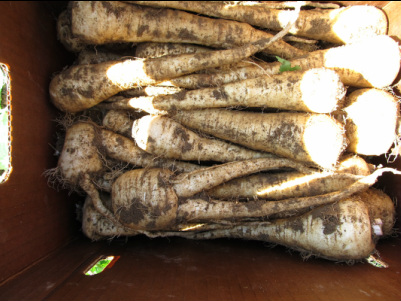
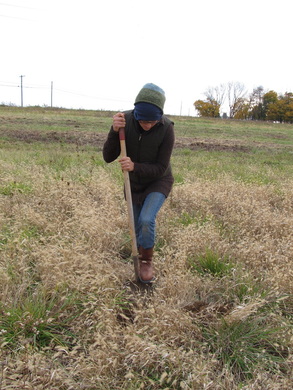
Fall Potluck, Personal Awakenings, and Parsnips Last Sunday was our Fall Harvest Celebration. The garlic planting was postponed due to the heavy rains earlier in the week which left our soil a little too wet for walking through and planting into, but we had the perfect number of folks join us to trim and clean the rest of the garlic for members to eat this season, and break up all the heads of seed garlic into individual cloves for Anton and I to plant this weekend which is upon us, once the drier soil welcomes our hands and feet. I'd been feeling a little numb, or tired, for some weeks now, sitting myself at a safe distance from the rest of the world and letting things pass over me, meanwhile lounging in my own private web of Farm Future Anxiety and Self Doubt. Its not really a good place to be, and I'd been sort of waiting for whatever was going to yank me out of There and pull me into Here, while also trying to hold myself accountable for these feelings and thoughts, and knowing that I was going to have to be the one doing the yanking. So after all of our friends and CSA members and family and fellow farmers left on Sunday night, and it was just Anton and I sitting on a picnic table in the warm greenhouse lit by strands of white lights with full bellies and loud clean-up music, we finally remembered that we are not alone. And it was great. The reminder, coming from the company of friends old and new, felt welcome and clear; we were reminded that each has faced their own particular version of struggle and obstacle, and moved through it with grace, mistakes, and accountability. Sometimes I wonder how to write about farming, and all the rest of life, in a genuine way; I mean: in a way which both captures the realities of things being hard and full of anxiety, without being sort of depressing and pathetic, and also a way where I can invoke the beauty of the idyllic farming moments full of poetry, sunrises, and heart-shaped celeriacs, without sounding (or being) too cheesy or hyperbolic in language and approach. We started harvesting Parsnips on the Monday morning following our Fall Potluck. Parsnips: those long, sweet, white roots which will store all winter and make a surprisingly harmonious addition to mashed potatoes or carrot cake. The ground is soft from the rain, but we still need a fork to get them out of the ground. The stubborn and especially long ones stick in the soil even after a healthy dose of forking, and so I am on my knees digging with hands, and the sandy earth is rich to handle. I enjoy this work. It is usually while I am working, alone or in quiet, that fierce and revelatory moments of clarity strike me: really obvious notions that I somehow need to reiterate to myself—retrieving these ideas anew and refreshing the spirit that these sentiments bring into my work and relationships. All of a sudden I remembered: it isn't all about me. The personal satisfaction is so secondary to the possibility of the multitude of other perhaps-delusional, lofty in their realness, ideas we have for what Good Work Farm could become, will be. The needs Good Work Farm could meet within the community, and within the lives of individuals. The people who could become a part of Good Work Farm and extend our capacity to serve, to lead, to speak, to follow. This is the fierce revelation which will continue to fuel me, continue to inform my work, during moments of confusion and perhaps struggle. This is the Good Work which we hope for, plan for, wait for, act for, budget for, seek farmland for, grow food for. We are getting there. Wait Galway Kinnell Wait, for now. Distrust everything, if you have to. But trust the hours. Haven't they carried you everywhere, up to now? Personal events will become interesting again. Hair will become interesting. Pain will become interesting. Buds that open out of season will become lovely again. Second-hand gloves will become lovely again, their memories are what give them the need for other hands. And the desolation of lovers is the same: that enormous emptiness carved out of such tiny beings as we are asks to be filled; the need for the new love is faithfulness to the old. Wait. Don't go too early. You're tired. But everyone's tired. But no one is tired enough. Only wait a while and listen. Music of hair, Music of pain, music of looms weaving all our loves again. Be there to hear it, it will be the only time, most of all to hear, the flute of your whole existence, rehearsed by the sorrows, play itself into total exhaustion 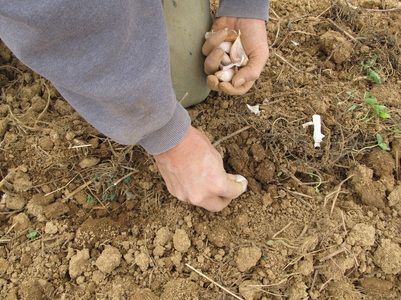
Mashed Caramelized Onion Parsnips N Taters
Ingredients: 4-5 small-medium potatoes the equivalent of 3 medium-sized parsnips 2 medium onions, sliced thin in strips or semi-circles 2-3 cloves garlic, minced butter/ olive oil/ ghee sea salt and pepper heavy cream, half-n-half, or milk herbs to garnish (parsley, thyme), minced (1) Bring water to boil in a large pot. Meanwhile scrub parsnips and potatoes. Cut parsnips into 1-2 inch chunks, trimming off tops and any woody bottoms. Leave potatoes whole. (2) Heat 1 T butter and 1 T olive oil in pan on medium-heat, add onions, a pinch of sea salt, and a nice layer of freshly ground black pepper. Continue to cook, stirring frequently, until onions are a light translucent brown. Add garlic and minced herbs for the last 2 minutes of cooking. Off heat. (3) When water boils, add a pinch of salt, parsnips and potatoes. Let simmer, uncovered, until potatoes and parsnips can be easily stuck with a fork. Make sure parsnips are cooked thoroughly! The best way to ruin the taste of parsnips is to undercook them. If necessary, remove potatoes and let parsnips cook a little longer. (4) Drain and return to pan with 2+ tablespoons of butter. Set heat to low. Add onion and herb mixture, salt and pepper to taste, and heavy cream (or milk) and begin to mash with potato masher. Add enough cream to reach desired consistency. Serve hot. (Courage, Callouses, Kale) 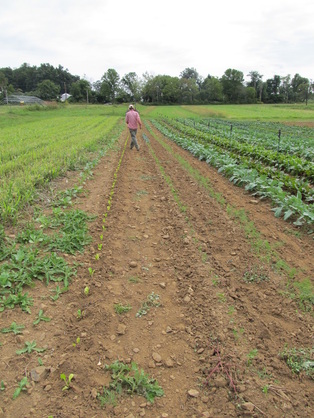
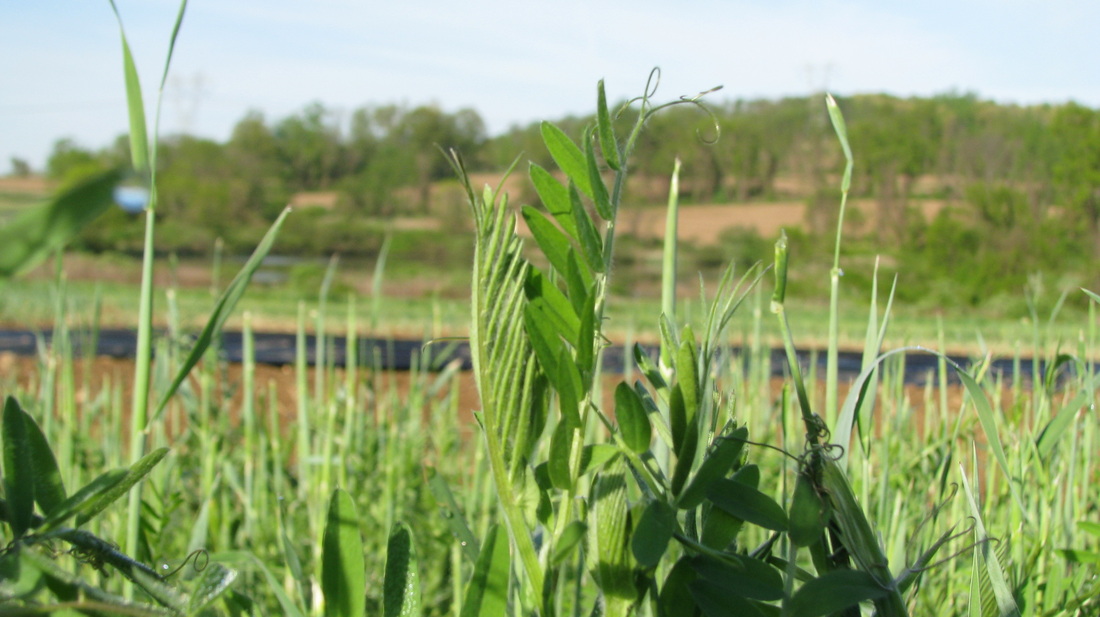
"Cultivation is dirty work. It entails everyday patience and impatience, care and carelessness, conversation, gesture, housecleaning, grocery shopping, taking out the trash, pulling weeds, making dinner, putting kids to bed, trying to listen to a friend when you don’t really have it in you, attending to the pain of a loved one. All in all, cultivation is a process of commitment. It involves all the quotidian obligations and routines that require thought at its lower register, often draining thought and frustrating the illusions of a higher ambition, in the hope and sense that this gesture or that chore is what needs to be done now if things are to be made right later. … It is difficult to imagine cultivation proceeding if there is not a passion for it and the things that may grow out of it—friendships, poems, families, food, and tropes, children, students, a confounded and complicated set of connections and disconnections, playing across all manner of talk and action." from Thomas L. Dumm The Politics of the Ordinary Sometimes movement is imperceptible to the naked eye, or the naked mind, but still happening. Sometimes faith is hidden beneath a frantic and uninvited cloud of work and worry, but still a flame within. The glints of autumn have been emerging out of corners of days for some time now, threading through late summer much earlier than expected. It was riding out to harvest in the back of the pick-up truck sometime in early August when I first voiced, between a question and a statement: the air almost feels like And someone else completed the thought fall. But now, after one of the most stifling hot can’t-drink-enough-water-to-stay-hydrated summer days on Wednesday—a last taste of heat purging our bodies of any remaining toxins, that familiar, nostalgic, and buoyant coolness has surfaced as a simple reminder of what is to come and what is already here. Cold air in conjunction with warm sun. Sleeping weather. Eating weather. Working weather. Cold feet at night, thermoses of hot soups at lunch, storage crops moving from under dirt into cellars and barns, to harden skins and sweeten fruit, to cure and wait. Planning for the future evolution of a farm, of this farm, the flesh of which does not exist, (or at least not in the form of a signed lease and a team of equines whose lines are in my calloused hands) is a practice of faith: faith in limbo and in the end of limbo, faith in the imperceptible movements. It is a meditation on the infinitesimal gestures we present into the great abyss, through works of pleasure, perseverance, and any unarticulated measures necessary to avoid the uninvited clouds of pessimism, cynicism, or doubt. With courage we maintain momentum, and invite the work of cultivation, the work of the minute. Fall: the sun relates to us at a different angle, the green leafy plants hold a different tenderness, sweetness, softness, and, despite the implications of the name, we are lifted into familiar realms of inner and outer work: another school year, a return to routine, a guarantee that the qualms and imperfections, the disasters and inclemencies, of this year will trope and turn, and give way to something: else. A resting, a dormancy, a hibernation, and a newness. We disc the dying vines, seed in the cover crops of rye and vetch and oats, begin to put the farm to bed—all the gestures and chores which need to be done now in order to make things right later. The work of our lives falls into place, so we may later spring into newness. It seems perfectly comprehensible that what we so often chose to believe and name as stagnancy, is but a series of intentions and events—conversations, emails, hopes, thoughts, meetings, documents, dreams, and plans—which later come together to manifest themselves as something altogether alive and moving: a business, a home, a farm. I am redrawn into the work of farming each day by the presence of the tangible--the manifestations of my work, and the earth's work, present to be held and smelled, tasted and known; but it is the many small and intangible gestures (of patience and impatience, of care and carelessness) which together bring the seed to germination, the fruit to ripening, the meal to being prepared, digested, and decomposed. It is to the secret and faith-filled work of these tasks to which we commit ourselves. When we most fail to notice the fruits of what our cultivations will produce, we are granted opportunities to clothe the eye and mind in new metaphorical garments, allowing the imperceptible movements to be perceived, and thus celebrated. Sincerely Yours, Lisa and Anton 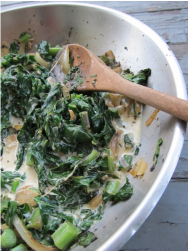 Everyday Kale Sauté Okay, this isn't just a cute rhyming-title. I actually have gone weeks this spring and late-summer where I eat this every night for dinner. Prepared in 23 minutes or less, over a bed of reheated millet or brown rice, this is pretty much what I consider a gourmet meal. I doubt you'll be disappointed. Especially if you don't skimp on the heavy cream. Ingredients: 2-3 T olive oil or butter or ghee 1 medium onion or shallot, chopped fine 2 or more cloves of garlic, minced herbs, fresh or dried, in abundance (at least a full T of dried herbs, or at least 2-3 T of fresh herbs): oregano, thyme, herbs de province, sorrel, parsley, basil... choose your own adventure black pepper, coarsely ground, and sea salt a splash of your favorite hot sauce or a pinch of red pepper flakes, (optional, but recommended) a pile of kale or other leafy greens (broccoli raab, arugula, spinach, chard, collards), washed and chopped--if you're using stems, chop fine and set aside; leaves can be ripped or chopped into chewable portions a dash of balsamic vinegar 2-3 T of crumbled blue cheese or other soft cheese (goat chevron and brie/ camembert style cheeses work well) (optional) a healthy splash of heavy cream (real, and good quality. I recommend Seven Stars or Natural by Nature, unless you have a cow yourself.) ume plum vinegar to taste (available in most health food stores, this salty fermented raw vinegar makes any vegetable, meat, or grain dish a little more divine) The how-to: (1) in a saucepan or caste iron pan with a lid, heat butter/ ghee/ oil on medium heat. Add chopped onion, salt, and black pepper. Continue stirring until onion browns and softens, a few minutes. (2) reduce heat. add herbs and hot sauce/ red pepper. add stems of greens. add minced garlic. (3) when herbs are fragrant and stems begin to soften, increase heat to medium and add greens. If pan is starting to brown, add a tablespoon of water and put the lid on for 1-2 minutes. Stir. Repeat if needed, careful not to add too much water. (4) when greens are tender and cooked down, and water is gone, add balsamic and let sizzle. add cheese if using. stir once, cover with lid, and off heat. add cream. add ume plum vinegar. eat immediately. 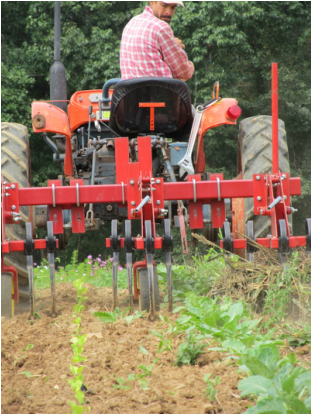
 Finding Goodness in the Quotidian Part i. Cultivation On my “day job” farm, the production farm where I have been spending the vast majority of my waking hours this season, I have been playing the part of “cultivation manager,” a role I took on with much pride and glee, appreciating the responsibility and the opportunity. In non-farming terms, the Oxford English Dictionary defines cultivation as “the process of trying to acquire or develop a quality or skill;” the Merriam-Webster offers the definition of cultivate as “CULTURE: REFINEMENT.” Pertaining to soils and vegetable crops, cultivation refers to the mechanical (instead of chemical) means of controlling and eradicating weeds, aerating the soil to stimulate biological activity, and helping retail soil moisture by forming a layer of crumbly soil-mulch on the surface. Cultivation can be done by tractor, horse, hoe, or hand, usually working largest to smallest, or grossest to finest. Cultivation necessitates observation—careful, constant, attentive. Learning at what moisture level the soil is ready to be worked by tractors, humans, or horses—to be walked on or worked in by a few thousand pound wheels, thousand pound hooves, or light but still jarring blades of hoes and hand-tools. Learning when, how, and if to compromise soil integrity for weed management. Watching how tall the plants of summer squash can get before the belly-mounted implements on the tractor can no longer go over them without damaging leaves. Fingering samples of soil to see how many “white root” baby weed seeds have germinated, and therefore need to be tilled—exposed to air and wind and wither quickly in the sun. There have been moments this season, many of them, when I am riding on a small diesel tractor gliding over my 6th bed of leeks or head lettuce and think: Ah, this is it, this is the culmination of my farming career, these moments in the sun killing weeds by the thousand, working soil so as to lower the weed seed-bank, give room for the plants we want to eat to grow more fully. There have been moments, like driving over the 10th of 18 beds of sweet potatoes, before the thick branches have vined out too far in the rows, when the soil is dry but not dusty, and the clock is nearing seven so I am moving at a nice clip for the last eight beds of the day, and I think: this might be a little of what flying feels like, this generous and swift movement, this momentum across clean beds, my eyes focusing on the small blade of the sweep as it moves beside the bed, pushing away soil like an ongoing wave. In the middle of last week, cultivating fall brassicas late in the day, I looked up to notice a dozen blue and black white-breasted birds circling me and the tractor. At first I thought they were following to dine on the worms and bugs recently uncovered in the newly turned soil, but they never seemed to swoop down into the dirt, only moving ceaselessly around this machine and I. Watching them, I realized driving a tractor is nothing like flying. I can try and make it poetic or beautiful, and it may very well be poetic and beautiful to me, but it is not flying. It is nice, but it is not effortless movement through air catching horseflies for dinner with humble self-propelled ease. In theorizing about what he calls the Ordinary, author Thomas Dumm defines the ordinary as “the serendipitous repository of happiness” and it is this phrase which I recall in my moments of birds and tractors, this common experience of quotidian goodness we are so familiar with we sometimes forget it is present. These ordinary moments of work and leisure offer us authentic joy, moments in which we find great and acute interest in what immediately and daily surrounds us: the familiar, the everyday, the undisguised and easily dismissed moments which compose us. In quotidian goodness and the appreciation of the mundane, Your farmers, Lisa and Anton 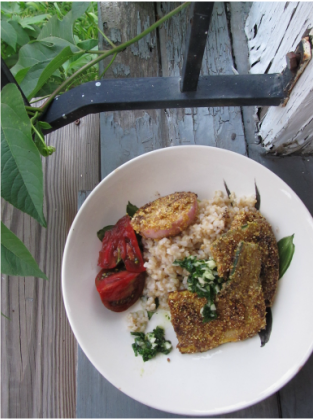
Part ii. Curcurbitacea
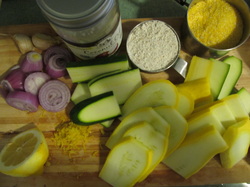
Polenta-Walnut Encrusted Summer Squash and Red Onion: Don't grow weary of summer squashes yet! Those tasty zucchinis still have a few weeks to go, and are versatile enough to be included in most culinary experiments, from curries to quiches to these tasty bites. Ingredients: 1 medium summer squash 1 medium zucchini 1 medium onion coconut oil for frying For the Crust: 1/2 C polenta or coarse corn meal 1/2 C walnuts, toasted in an oven or stove-top in a cast iron pan 1/3 C whole wheat flour fresh black pepper sea salt For the batter: zest of one lemon 1 large or 2 small eggs, beaten For the dressing: juice of one lemon, freshly squeezed a generous pour of high quality olive oil two cloves garlic, pressed and minced a handful of fresh parsley or basil leaves, minced fine a pinch of salt Cut Summer Squash and/or Zucchinis in half to form two shorter rounds. Slice each of the four quadrants length-wise into 1/4-inch "sheets" of squash. On the end pieces, cut off the skin to form a flat and absorbent surface. Slice the onion into 1/4-1/2 inch slices, careful to keep the layers in-tact. For the Walnuts: Toast whole or halved walnuts on a caste iron over medium heat (or in an oven), keeping a close watch and shaking the pan often. Let cool. Grind in a food processor or clean spice/ coffee grinder, or, bang with a wooden mallet in a well-sealed and sturdy plastic bag. Combine walnut-meal, polenta or coarsely-ground corn meal, wheat flour, salt, and pepper, and mix to incorporate. Zest one lemon (about 1 T) and add to scrambled egg. Heat 1+ tablespoons of coconut oil on cast-iron pan over medium heat. You can use another oil, but I wouldn't recommend it. The subtle flavor of coconut combined with lemon and squash is pretty lovely, and the coconut retains its clean flavor without burning at medium heat. Dip each vegetable slice into egg, getting each side wet, then toss into dry-mixture, coating each side fully. Cook in hot oil on medium heat until each side is crispy and browned, about 4-6 minutes per side. Adjust your heat to prevent from burning the squash. The onions need about double the time to cook thoroughly. Dress and Dine! To make the dressing: combine ingredients in a small bowl or jar and whisk with fork to combine. The flavor of garlic is strong; perhaps if you're making these for a first date you'd consider less garlic, or slightly cooking garlic in olive oil on low heat for a milder flavor. Serve and Eat warm, over rice and with a slice of tomato... or piping hot as a crispy appetizer with dressing to top. If you are feeling ambitious, these would be tasty with a dollop of home-made aioli. Have leftovers? The perfect addition to an open-faced sandwich. Reheat on the pan, add to a slice of toasted crusty whole-grain bread, top with thinly-sliced or grated parmesan, and a slice of tomato. 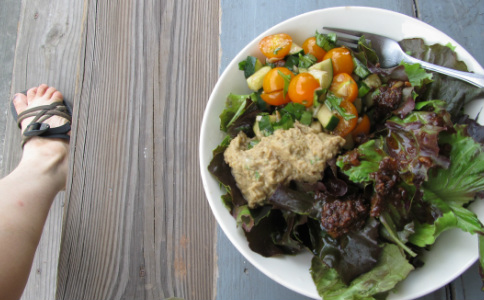 Dear Members and Friends, On the reallyreallyhot days, the too-hot-to-think-and-work-at-the-same-time-days, we farmers spare ourselves the misery of dust and debasement, and find mid-day work indoors—content to struggle over the finesses of balancing our 2014 farm budget over a glass of water and a blowing fan. As the summer moves upon us—one startling heat wave, and one ripe tomato, at a time—my mind, heart, and intention move me closer to the reality of partnering with Anton to co-run Good Work Farm next summer, 2014. On the days when I have the opportunity to spend a few morning hours with my hands in the dirt weeding onions and seeding fall lettuces here at Good Work, my mind occupies itself wondering over the selections which we will together make available for CSA members next spring and early summer. Is it too early for me to be planning your menus for next May? If we are going to overwinter scallions and leeks for next Spring’s harvest (literally, to sew seeds this fall which will sprout into seedlings, then stay in the ground in a state of dormancy over-the-winter, re-awakening to grow again next early Spring as the days lengthen, ready to be harvested in May or June), then we’d better be placing orders with seed catalogues about now. In this way, I feel myself more and more becoming part of Good Work Farm, becoming your farmer—even though I have not met most of you yet—incorporating myself into this living farm entity in some seamed or seamless transition. I am aided in this process through writing, a supple tool which allows me to connect with my fellow humans—to share my story, to translate my mundane and surreal experiences of earth and food and work, into a set of images: tactile, stimulating, judicious. I hope, I hope, I hope. As I move through the second half of this season, the welcome fall, the humble winter, and the dawning of next year’s season of growing, I hope to use writing as a branch, weaving myself into Good Work Farm through the steadiness of word and story. For now, Anton and I: we are looking for landowners who we share a compatible vision with. We are looking for land: that smells rich, that looks like it might retain nutrient but drain water, that is spacious enough to feed eighty local families and two working horses. We are scrutinizing soil maps, searching for sample lease documents, admiring barns, and making connections with neighbors we didn’t know. We are finding horses on-line to enchant us, to consider “test driving“ all the way in Clyde, North Carolina; we are drooling over digital images of these elegant beasts and wondering if we have enough skill to handle them firmly. We are building ideas and building a farm. We have firm ground to stand on: Anton and Sarah, and now Anton alone, have built this farm and gathered this community, and now we prepare to shift slightly, to wiggle, walk, work, and dance our way into the next step of this farm—continuing out of the same graceful vision, carrying with us the same commitments to the food, the land, the people, and to one another. Farmers are naturally people of faith: we must be in order to be successful, rather than debilitated, in the face of spontaneous challenges, inclement weather, and inexact futures. We seek, and find, adventure in the quotidian; the adventures our scary and delightful, for the stakes are high (feeding people!) and the learning curve is steep, but somehow, most of the time, the adventures only serve to offer us another generous portion of the faith we so dearly need to do it all again. In hot days, ripe fruits, and farmer faith, Lisa and Anton 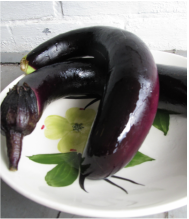 Smoky Baba Ganoush with Teriyaki Sauce
Confession: I am not good at measuring and cooking at the same time. Below is an attempt to offer you a recipe for a tasty, smoky, teriyaki style Baba Ganoush, but be prepared to have some room for inner and outer exploration. Usually in the summer I like to keep my vegetables pretty plain: a little salt, a little butter, but let the flavors of the season speak for themselves. But something inspired me to add a little spice to my eggplant, and this is what came of it... Makes one pint of Baba and 1/2 pint of teriyaki Ingredients! Teriyaki Sauce: the white part of one leek, finely grated into a juicy pulp 1 T fresh grated ginger 2 cloves of garlic, minced a dash of olive oil, and a dash of coconut oil salt and ground black pepper a healthy spoonful of each: ground cumin, ground coriander, paprika 2-3 T maple syrup (or honey) a dash of tamari (or soy sauce) 1 T balsamic vinegar 1/2 T lemon juice 1 generous T miso (I used a 3 year dark brown rice miso to add some umph) To make the sauce: Heat oils in small saucepan on medium-low. Add onion, garlic, and ginger and stir for 2-3 minutes. Add salt, pepper, and spices and heat, stirring, until fragrant (another minute or two). Add rest of ingredients except for miso, stirring. Off heat. Add miso and incorporate. Let cool. For the Baba: 2 small or 1 medium/large eggplant, whole coconut oil 2 T tahini 1T ("a dash") of lemon juice salt to taste 2 T or more olive oil (extra virgin) 1 clove of garlic, crushed and sliced 2 T teriyaki sauce (to the right) 8 leaves basil, sliced thin To cook the eggplant: Eggplant, whole, can be grilled, baked, or cooked as I did, for a smoky aroma that steams the insides by keeping the skin in-tact. Coat skins with coconut oil with your hands. On open flame on your gas burner: set whole eggplants on your range on medium heat, keeping constant watch, about 2-3 minutes per side, moving frequently to assure even cooking. If you're using one large eggplant, this process will take longer. Another option is to pre-cook stove-top for smokiness, and then throw in the oven at 400 for 10-15 minutes to assure the eggplant is thoroughly soft. Be prepared to clean your stove top well. Let cool. When cool: Chop off tops and peal skins (should come off easily with your fingers). In food processor, or mashing with a fork/ potato masher, combine all ingredients except basil leaves and mix until smooth, or your desired consistency. Add more olive oil/ lemon juice as desired for extra smoothness. Add basil and pulse one time. Serve as a thick salad dressing atop a bed of lettuce, with an extra scoop of teriyaki on the side. The Ever-Evolving Threads of Good Work Farm: Spring 2013 Written by maybe-frequent guest-not-ghost writer |
Archives
December 2019
FarmersAnton M. Shannon Categories
All
|

 RSS Feed